The IBM System/38, often abbreviated as S/38, represents a landmark in the evolution of midrange computing systems. Introduced by IBM in the late 1970s, it was a minicomputer designed for business data processing, featuring innovative architecture that emphasized object-oriented design, integrated database management, and hardware independence. Marketed as a general-purpose system for small to medium-sized businesses and departmental use, the System/38 bridged the gap between earlier IBM systems like the System/3 and System/34, while laying the groundwork for future platforms such as the AS/400 and modern IBM i. Its development spanned nearly a decade, incorporating lessons from IBM’s ambitious but failed Future Systems project, and it introduced concepts that influenced computing for decades. Despite its discontinuation in the late 1980s, the System/38’s legacy endures in contemporary enterprise systems, highlighting IBM’s commitment to reliability and forward-thinking design.
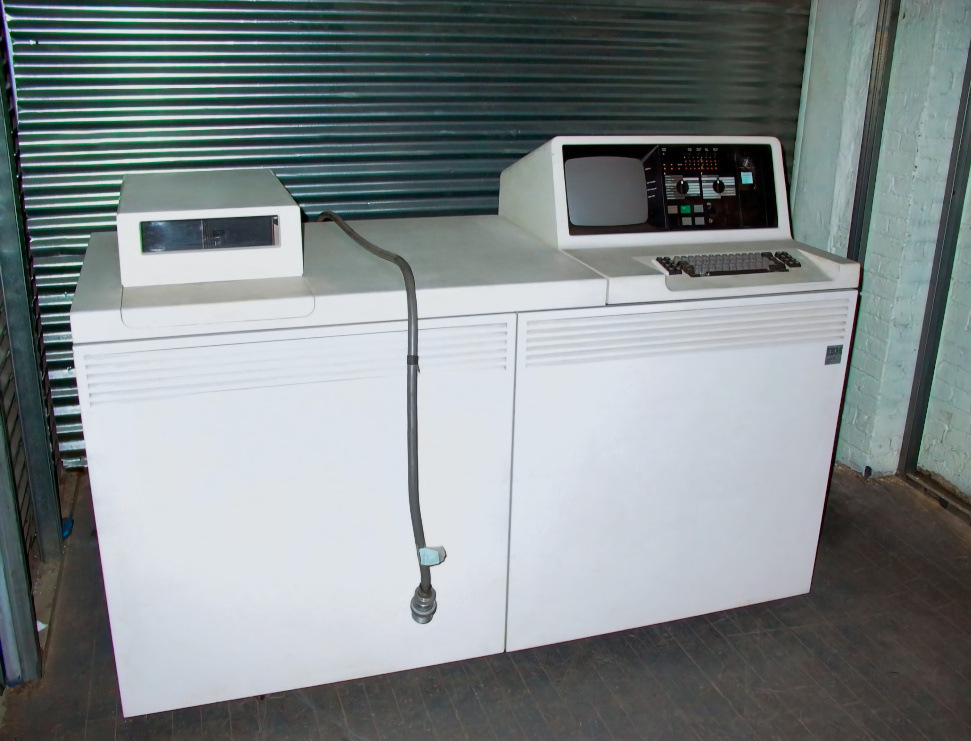
Table of Contents
Development Background and Key Projects
The origins of the System/38 trace back to the early 1970s, amid IBM’s efforts to modernize its midrange offerings. Codenamed “Pacific,” the project was spearheaded at IBM’s Rochester, Minnesota laboratory, with key contributions from engineers like Frank Soltis (chief architect) and Glenn Henry. Development began around 1970, drawing inspiration from the unsuccessful IBM Future Systems (FS) initiative, which aimed to create a unified family of computers but was canceled in 1975 due to complexity and cost overruns. The System/38 incorporated FS ideas such as single-level store memory management and a high-level machine interface, adapting them for a more feasible midrange platform.
IBM’s General Systems Division described the System/38 as one of its largest programs ever, involving an eight-year development cycle. Glenn Henry, in oral histories, detailed his role in software systems engineering during the 1970s, focusing on microcode implementation and the integration of operating system functions into hardware-like layers. The project addressed the limitations of predecessors like the System/3 (introduced 1969), System/32 (1975), and System/34 (1977), which lacked the scalability and integration needed for growing businesses. Unlike those systems, the System/38 was not backward-compatible, prioritizing innovation over seamless upgrades.
Challenges during development included balancing advanced features with cost-effectiveness, as well as navigating post-1969 antitrust regulations that required unbundling software from hardware. This led to a microcode structure where low-level functions were treated as “hardware” to comply with legal requirements.
Announcement, Release, and Evolutions
The IBM System/38 was officially announced on October 24, 1978, with commercial availability starting in August 1979 and initial customer shipments in the summer of 1980. Promotional materials from the era, including a 1983 IBM film, highlighted its use in business environments, showcasing installations at companies for data processing tasks. The system evolved through several models: the initial IBM 5381 (Models 100 and 200) and the more powerful IBM 5382 (Models 300–700), which offered expanded memory and storage.
In 1983, IBM introduced the System/36 as a lower-cost alternative to address pricing concerns with the System/38. Upgrades included support for graphics-oriented terminals starting in 1984, enhancing user interfaces beyond the standard 5250 block-oriented terminals. The System/38 was discontinued in 1988 with the launch of the AS/400, which inherited its architecture while adding compatibility for System/36 applications. End-of-support details are not extensively documented, but the platform’s phase-out aligned with the AS/400’s introduction, marking the end of standalone System/38 hardware maintenance.
Architecture Features and Technical Specifications
The System/38’s architecture was revolutionary, featuring a 48-bit addressing system—chosen as a compromise between 32-bit cost savings and 64-bit future-proofing—supporting up to dozens of users via terminals. Key innovations included:
- Object-Based Design: All system resources (files, programs, queues, user profiles) were treated as objects with encapsulated attributes and access controls, enhancing security and modularity.
- Single-Level Store: Memory and disk were unified into a single virtual address space, managed by a memory management unit for demand paging, simplifying data handling and improving performance.
- Machine Interface (MI): A high-level virtual instruction set abstracted hardware, allowing programs to be compiled into MI instructions that could be re-translated for new processors without runtime interpretation.
- Microcode Structure: Divided into Horizontal Microcode (HMC) for low-level operations in control store and Vertical Microcode (VMC) for higher functions in main memory, using languages like PL/MP and IMPI assembly.
The operating system, Control Program Facility (CPF), was the first in IBM’s midrange line to include an integrated relational database—predating the formal DB2 branding and dating back to 1978 concepts. Control Language (CL) provided shell-like scripting, and security featured architectural user-based controls.
Technical specs included:
- Processor: Twenty-nine Schottky TTL LSI chips on a 10×15″ board.
- Memory: 512K to 1536K bytes.
- Storage: Built-in disk and diskette magazine drive.
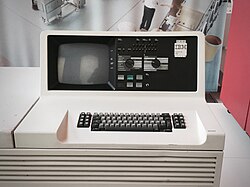
- Console: 16×64 character display with keyboard.
- Dimensions: Approximately 1260x1775x750mm.
Market Impact and Sales Figures
Positioned as a minicomputer for business applications, the System/38 achieved moderate success, with an estimated 20,000 units sold in its first five years. It generated higher profit margins than contemporaries like the System/34 or System/36, despite slower sales due to its higher price point. Market challenges included overlap with other IBM systems and competition from unified platforms like DEC’s VAX, which capitalized on IBM’s fragmented midrange lineup. Promotional efforts, such as the 1983 film featuring real-world implementations, emphasized its reliability and ease for data processing in sectors like manufacturing and finance.
Legacy and Innovations
The System/38’s innovations—object-based architecture, integrated DBMS, and MI abstraction—profoundly influenced the AS/400 (1988) and IBM i, ensuring backward compatibility for decades. Programs with “observability” could be recompiled for AS/400, and its database evolved into the embedded relational system in IBM i, now 45+ years old as of 2023. Challenges like incompatibility and cost were overcome in successors, solidifying its role in midrange computing history. Today, its principles underpin mission-critical applications worldwide, a testament to IBM’s visionary engineering.
Final Thoughts
The IBM System/38’s history encapsulates a era of bold innovation in computing, from its protracted development to its lasting architectural contributions. While it faced market hurdles, its forward-looking design paved the way for enduring platforms like IBM i, demonstrating how foundational technologies can evolve to meet future demands. As of 2025, its influence remains evident in enterprise systems that prioritize security, integration, and scalability.
- https://en.wikipedia.org/wiki/IBM_System/38 Comprehensive overview of the System/38, including announcement (October 24, 1978), availability (August 1979), development codename “Pacific”, key architects (Frank Soltis and Glenn Henry), architecture details (48-bit addressing, single-level store, Machine Interface), and legacy influence on AS/400/IBM i.
- https://builtonpower.com/2022/10/computer-history-ibm-system-38-minicomputer-business-data-processing-1983-promo-audio-fixed/ Host page for the 1983 IBM promotional film featuring real-world System/38 installations; provides context on market positioning, development timeline (eight years in Rochester), and sales figures (~20,000 units in first five years).
- https://www.itjungle.com/2023/10/02/40-years-of-db2-but-even-more-for-that-no-name-database-embedded-in-system-38/ IT Jungle article discussing the integrated relational database origins in System/38 (influenced by Edgar Codd’s work), predating formal DB2 branding.
- https://www.youtube.com/watch?v=p9Fw46HKjlw 1983 IBM promotional video showcasing System/38 in business environments (linked from various archives).
- https://conservancy.umn.edu/items/4d5d3691-2644-46cf-bfab-766f09f7af2b Oral history interview with Glenn Henry (2001, Charles Babbage Institute), detailing his role in System/38 software/hardware integration, microcode, and project challenges.
- http://bitsavers.informatik.uni-stuttgart.de/pdf/ibm/system38/IBM_System_38_Technical_Developments_Dec1978.pdf IBM System/38 Technical Developments (1978), covering architecture specifics like pointers, single-level store, and microcode layers.
- https://homes.cs.washington.edu/~levy/capabook/Chapter8.pdf Chapter from “Capability-Based Computer Systems” on System/38’s capability-based addressing and object model.
- http://bitsavers.informatik.uni-stuttgart.de/pdf//datapro/datapro_reports_70s-90s/IBM/M11-491-70_8005_IBM_System_38.pdf Datapro report on System/38 management summary, including announcement date and technical specs.
- https://www.corestore.org/38.htm Private collection page with photos and notes on System/38 hardware, emphasizing its advanced features and ties to the failed Future Systems project.
- https://www.ibm.com/history (related sections on Rochester lab and midrange systems) IBM’s official history resources referencing the System/38’s development and innovations.