The IBM POWER architecture represents a cornerstone of high-performance computing, embodying the principles of Reduced Instruction Set Computing (RISC) to deliver efficient, scalable processors for enterprise servers, supercomputers, and embedded systems. Developed by IBM since the late 1980s, POWER—standing for Performance Optimization With Enhanced RISC—has evolved through multiple generations, powering everything from IBM’s RS/6000 workstations to modern AI-accelerated data centers. As of December 2025, the latest POWER11 processors continue to push boundaries in performance, energy efficiency, and hybrid cloud integration. This article explores the RISC foundation, historical development, processor evolutions, related concepts like PowerPC and OpenPOWER, and the architecture’s ongoing impact.
Table of Contents
History of IBM POWER Architecture
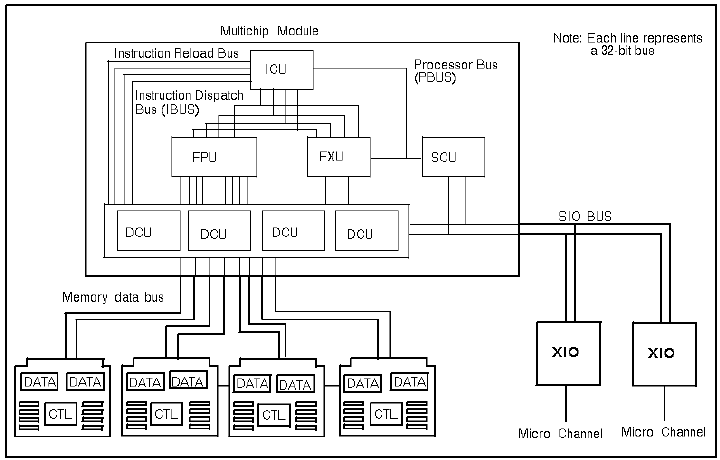
The POWER architecture traces its roots to the IBM 801 research project in 1974, aimed at creating a high-speed processor for telephone switches capable of 12 MIPS. Led by John Cocke, it emphasized simple instructions and large registers, laying RISC foundations. After the project’s cancellation, concepts evolved through the 1982 Cheetah project (exploring superscalar designs) and the 1985 America project, culminating in the RS/6000 series.
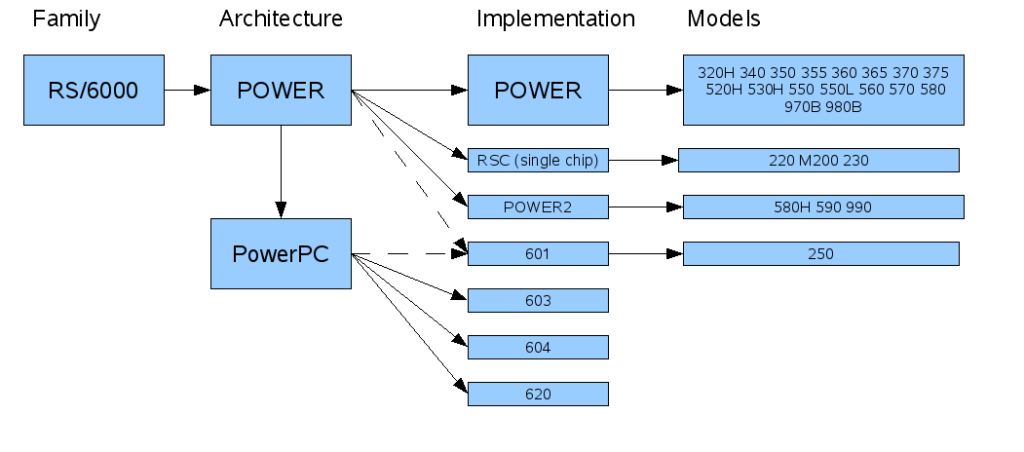
Introduced in February 1990 with the RISC System/6000 (RS/6000), POWER1 featured multi-chip configurations like RIOS-1 (10 chips) and RSC (single-chip for lower-end models). This marked IBM’s entry into RISC-based workstations and servers, competing with systems from Sun and HP. The architecture’s superscalar design allowed multiple instructions per cycle, with 32 integer and 32 floating-point registers.
The golden era from 1994 to 2006 saw widespread adoption, including in Apple’s Macintosh computers. By the 2010s, POWER focused on enterprise and supercomputing, with open initiatives expanding its ecosystem.
Understanding RISC: Principles and Advantages
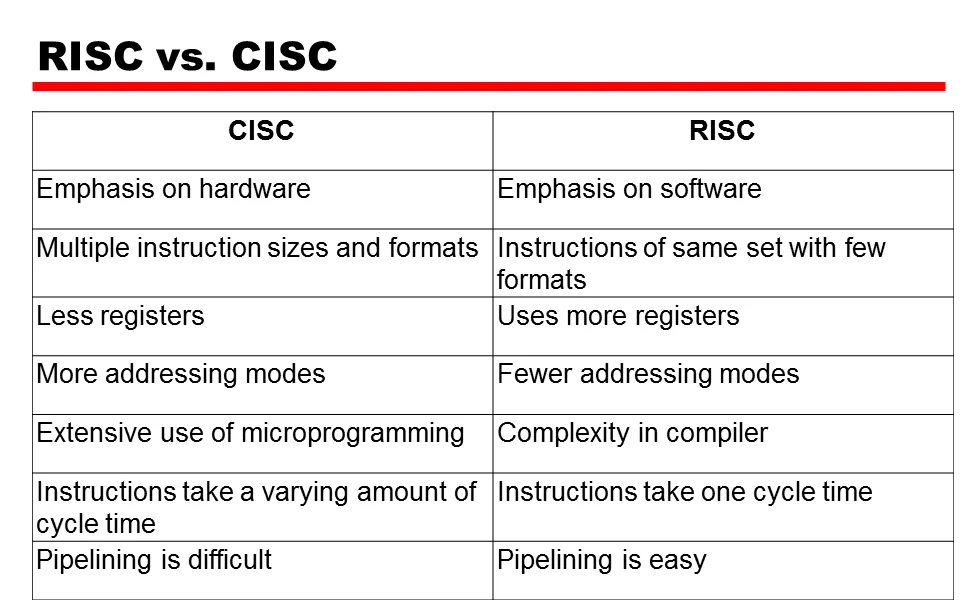
Reduced Instruction Set Computing (RISC) is a processor design philosophy that prioritizes simplicity and speed by using a small set of basic instructions that execute quickly, often in a single clock cycle. Unlike Complex Instruction Set Computing (CISC), which employs complex, multi-cycle instructions to perform intricate operations directly in hardware, RISC relies on compilers to break down tasks into sequences of simple instructions. Key principles include:
- Load-Store Architecture: Operations occur only on registers; memory access is limited to load (memory to register) and store (register to memory) instructions, reducing complexity.
- Fixed-Length Instructions: Uniform size (e.g., 32 bits) simplifies decoding and enables efficient pipelining, where instruction stages overlap for higher throughput.
- Large Register Sets: Ample registers minimize memory accesses, boosting performance.
- Compiler-Centric Optimization: Compilers handle complexity, exposing hardware details for better code generation.
Advantages of RISC include faster clock speeds due to simpler hardware, better pipelining, lower power consumption, and scalability for parallel processing. In simulations, RISC designs achieved up to three times the speed of equivalent CISC systems by optimizing for common operations. However, RISC may result in larger code sizes, though modern techniques like instruction compression mitigate this.
| Aspect | RISC | CISC |
|---|---|---|
| Instruction Complexity | Simple, single-cycle | Complex, multi-cycle |
| Set Size | Small, focused | Large, versatile |
| Execution | More instructions, faster per cycle | Fewer instructions, variable cycles |
| Architecture | Load-store, register-based | Memory-to-memory, varied modes |
| Performance Focus | Pipelining and compiler optimization | Hardware microcode for complexity |
| Examples | IBM POWER, ARM, MIPS | Intel x86, Motorola 68k |
IBM’s POWER architecture exemplifies RISC, drawing from the 1970s IBM 801 project, which focused on register-heavy designs and compiler efficiency to achieve high speeds. This RISC heritage allows POWER to excel in workloads requiring high parallelism, such as AI and scientific computing.
Evolution of POWER Processor Generations
POWER processors have advanced through 11 generations, each building on RISC principles with enhancements in cores, clock speeds, and features:
- POWER1 (1990): Multi-chip, superscalar; up to 10 chips, 32/64-bit support.
- POWER2 (1993): Added dual fixed-point and floating-point units, hardware square root; P2SC variant powered Deep Blue chess supercomputer.
- POWER3 (1998): 64-bit PowerPC compatibility, SMP support.
- POWER4 (2001): Dual-core, gigahertz speeds; foundational for modern servers.
- POWER5 (2004): Simultaneous multithreading (SMT), improved virtualization.
- POWER6 (2007): High-frequency cores, decimal floating-point.
- POWER7 (2010): Up to 8 cores, TurboCore mode.
- POWER8 (2014): 12 cores, CAPI for accelerators.
- POWER9 (2017): NVLink for GPUs, AI optimizations.
- POWER10 (2020): Matrix math assist for AI, enhanced security.
- POWER11 (2025): Enhanced 7nm process, 2.5D stacking, up to 120 cores, 16 TB DDR5 memory; 3x per-core performance vs. POWER9, on-chip AI accelerators, up to 28% energy efficiency gains. Clock speeds reach 4.4 GHz, with 72 I/O lanes for interconnects. The Spyre Accelerator, available Q4 2025, adds AI capabilities.
Related Concepts: PowerPC, AIM Alliance, and OpenPOWER
POWER spawned PowerPC through the 1991 AIM (Apple, IBM, Motorola) alliance, creating a RISC ISA for personal computers, embedded systems, and game consoles (e.g., Xbox 360, PlayStation 3). PowerPC evolved into the Power ISA in 2006, with IBM developing ASIC cores for high-volume applications.
The OpenPOWER Foundation, announced in 2013 as the OpenPOWER Consortium, promotes collaboration around Power ISA-based products. IBM opened the Power ISA in 2019, moving governance to the foundation and enabling royalty-free licensing for innovation in data centers and hybrid clouds. It provides resources like the IBM Power Development Cloud for open-source development on POWER9 and earlier. The Linux Foundation adopted OpenPOWER in 2019 to boost hardware performance.
Applications and Impact
POWER drives IBM Power Systems for mission-critical workloads in finance, healthcare, and AI. Supercomputers like Summit (POWER9) and Fugaku (ARM-based but RISC-inspired) highlight its high-performance computing prowess. In 2025, Power11 servers like the E1180 emphasize autonomous operations, ransomware detection, and AI integration. The architecture’s RISC roots enable energy-efficient, scalable designs, influencing modern computing beyond IBM.
Current Status and Future Prospects
As of late 2025, POWER11 is generally available, with systems supporting AIX, IBM i, and Linux. Future directions include AI accelerators, quantum integration, and sustainable IT. OpenPOWER fosters ecosystem growth, ensuring POWER’s relevance in an open-source world.
Final Thoughts
IBM POWER architecture, rooted in RISC innovation, has transformed from a 1990s workstation powerhouse to a 2025 AI and cloud enabler. Its evolution underscores the enduring value of simplicity, scalability, and openness in computing.
- IBM POWER architecture – Wikipedia – Comprehensive overview of history, features, and evolutions.
- The Historical Evolution and Technical Analysis of IBM Power Architecture – Detailed timeline and technical insights.
- IBM Power Architecture – IBM Research Report – Early history and instruction details.
- I’m a POWER user – 30-year overview.
- IBM Power – What’s Next? – Discussion of Power lines and future.
- IBM Power4 – System-level architecture details.
- IBM i History and Timeline – Hardware evolution context.
- Power Architecture – Origins and RISC aspects.
- Evolution of IBM POWER Processors – Generational breakdown.
- IBM POWER architecture – RISC relation.
- IBM POWER vs. x86 – RISC birth.
- The Evolution and Impact of RISC Architecture – RISC principles.
- IBM Power11 Raises the Bar – POWER11 availability.
- With Power11, Power Systems “Go To Eleven” – Clock speeds and comparisons.
- A Deep Dive into the IBM Power11 Server Lineup – Common features.
- The World’s Most Powerful Server Embiggens A Bit With Power11 – I/O details.
- IBM Power11 Scale-Out Servers – Processor specifics.
- Power11 is here – Performance gains.
- Accelerate your open source development – OpenPOWER tools.
- OpenPOWER Foundation – Wikipedia – Consortium history.
- IBM Power Development Cloud – Developer access.
- Putting the “Open” in OpenPOWER – Licensing benefits.
- IBM’s OpenPOWER: A Lot Has Changed In Two Years – Early changes.
- What Open Sourcing Power’s ISA Means – Governance shift.
- Linux Foundation Powers Up on IBM’s OpenPOWER – Adoption.
- Reduced instruction set computer – Wikipedia
- RISC explanation. Power servers | IBM – Current offerings.