IBM i Encryption Key Management is evolving beyond traditional platform-bound approaches, as organizations seek stronger control over how encryption keys are generated, stored, and used. While IBM i provides robust native encryption capabilities, modern security architectures increasingly demand centralized and scalable solutions.
With the enforcement of regulatory frameworks such as the Central Bank of Sri Lanka (CBSL) guidelines and the Personal Data Protection Act (PDPA), organizations in Sri Lanka’s Banking, Financial Services, and Insurance (BFSI) sector are under increasing pressure to secure sensitive data—especially Personally Identifiable Information (PII). A key requirement emerging from these regulations is strong encryption, particularly at the database level, along with Data at REST and Data in Transit encryption.
For enterprises running mission-critical workloads on IBM i, this introduces both an opportunity and a challenge. Read my blog post titled “Navigating the New Era of Data Privacy: A Comprehensive Roadmap for Sri Lankan Banks” to delve deeper into this topic.
I’m aware that other Southeast Asian countries also have similar requirements with their respective regulations. I believe this scenario is applicable to other parts of the world as well. Therefore, this is a common challenge and an opportunity for most IBM i shops.
Table of Contents
The Growing Need for Encryption in IBM i Environments
IBM i has long been recognized for its robust security architecture. It provides several native encryption capabilities, including:
- Db2 for i Field Procedures (FIELDPROC) for column/field-level encryption
- Integrated Cryptographic Services APIs for custom encryption implementations
- Hardware-assisted cryptography on Power Systems.
These capabilities are powerful—but modern compliance requirements demand more than just encryption.
Organizations now require:
- Centralized control of encryption keys
- Strict separation between data and key ownership
- Enterprise-wide encryption policies
- Auditability and compliance reporting
This is where external enterprise key management becomes essential.
Why Centralized Key Management Matters
Traditionally, encryption keys are stored locally within the same environment where data resides. While convenient, this model introduces several risks:
- ❌ Lack of separation of duties
- ❌ Increased risk of key compromise
- ❌ Difficulty in enforcing enterprise-wide policies
- ❌ Limited visibility and auditing
In contrast, centralized key management provides:
- ✔ Secure key storage outside the data layer
- ✔ Controlled access with role-based policies
- ✔ Automated key rotation and lifecycle management
- ✔ Unified governance across multiple platforms (IBM i, Linux, cloud, etc.)
- ✔ Regulatory Compliance & Auditing: Centralized systems simplify compliance with stringent standards such as GDPR, HIPAA, and PCI DSS by providing consolidated, detailed audit logs and reporting, which makes proving compliance much easier.
Introducing HashiCorp Vault
There are excellent solutions available, and one of the leading solutions in this space is HashiCorp Vault.
Vault is a modern secrets and encryption key management platform designed for dynamic, distributed environments. Its key strengths include:
- Centralized secrets management
- Dynamic key generation and leasing
- Encryption-as-a-Service (EaaS)
- Fine-grained access control (ACLs, policies)
- Audit logging and compliance support
- API-first architecture for integration
Vault is increasingly being adopted by BFSI organizations looking to standardize their enterprise security architecture.
The Integration Challenge with IBM i
Despite its strengths, integrating Vault directly with IBM i is not straightforward.
From my practical experience, knowladge and current IBM i architecture, IBM i does not natively support KMIP (Key Management Interoperability Protocol) out of the box (correct me if i’m wrong).
This means:
- Direct integration with external KMIP-based key managers is not natively available.
- Additional tooling or middleware is required.
- Custom implementations can become complex and difficult to maintain.
This creates a gap between modern key management platforms and lBM i.
Bridging the Gap with Fortra Powertech Encryption for IBM i
To address this challenge, we explored integration using Fortra Powertech Encryption for IBM i.
Powertech Encryption for IBM i is a comprehensive solution that provides:
- Native Db2 field-level encryption, IFS encryption and Backup Encryption.
- Seamless integration with IBM i applications.
- It can be implemented with minimal changes to the application (sometime no application changes).
- Built-in key management framework – Note1.
Note1: No external key managers are required, and keys can be maintained within IBM i. This is beneficial for organizations that do not have an external key manager.
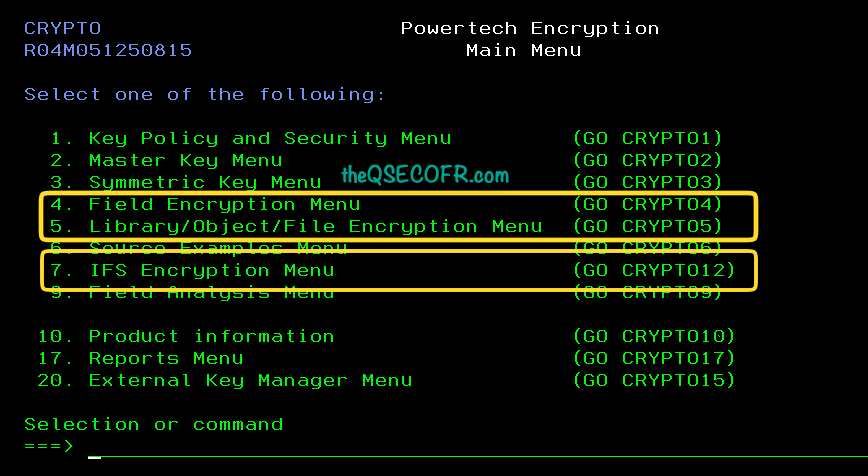
However, one of its most powerful features is: Support for external key managers via KMIP
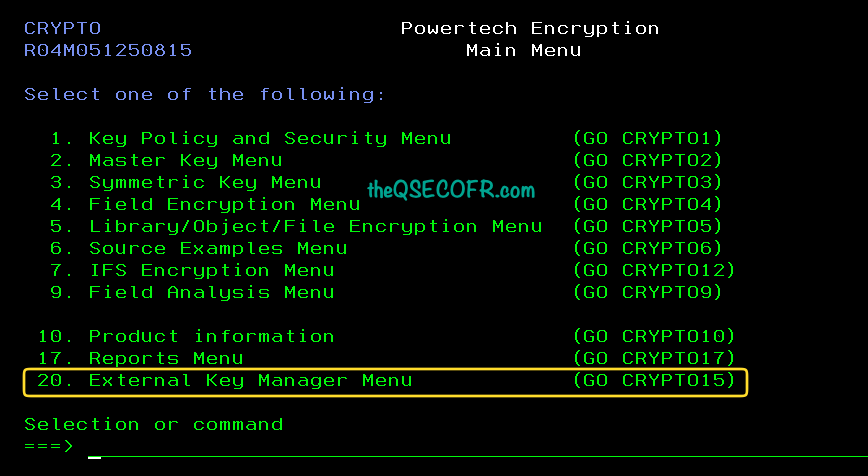
How Powertech Encryption for IBM i Integrates with HashiCorp Vault
Powertech Encryption supports communication with external key managers using the KMIP protocol, which is the industry standard for key management interoperability.
Supported Communication Methods:
- KMIP over TCP (secured via TLS)
- KMIP over HTTPS
- TTLV (Tag-Type-Length-Value) encoding
- XML-based encoding
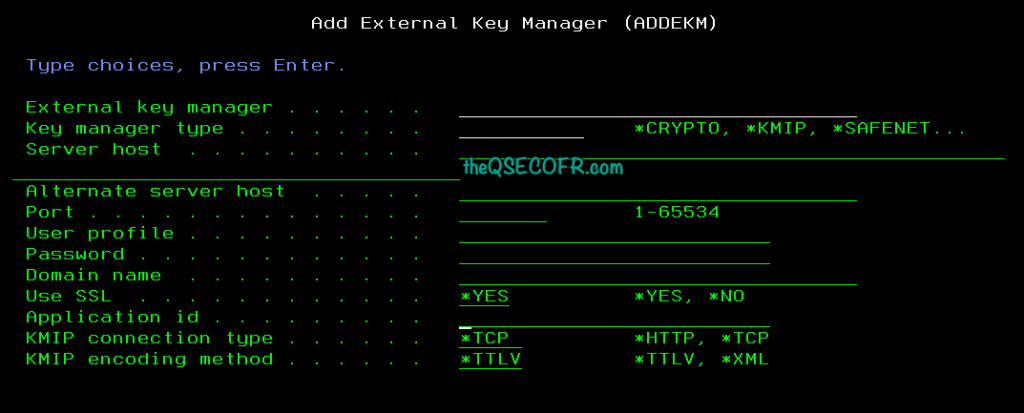
What This Enables:
- Storage of encryption keys in Vault instead of IBM i
- Secure key retrieval during encryption/decryption operations
- Use of externally managed keys for Backup Encryption and Db2 FIELDPROC encryption
- Centralized policy enforcement across environments
Practical Implementation Experience
Over recent weeks, we conducted hands-on testing to validate this integration in our Test environments.
Key Outcomes:
- Successfully configured Vault as an external KMIP-compatible key manager.
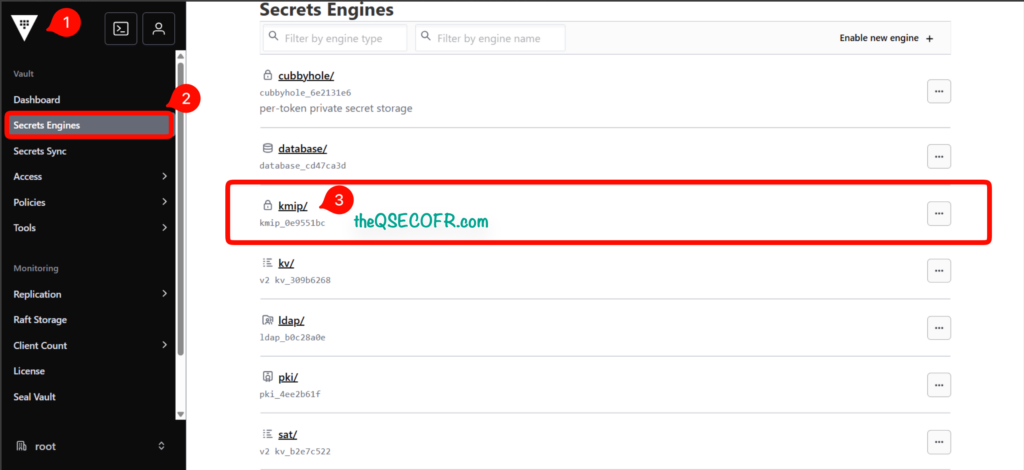
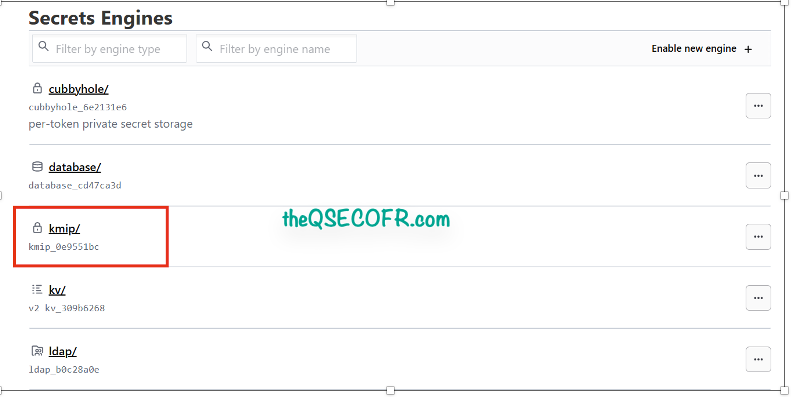
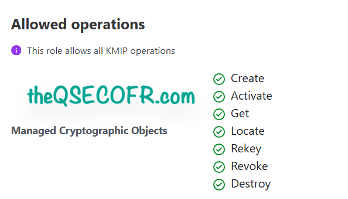
Use below link to see a step-by-step guide for configuring Hashicorp Vault.
- Integrated Vault with Powertech Encryption on IBM i
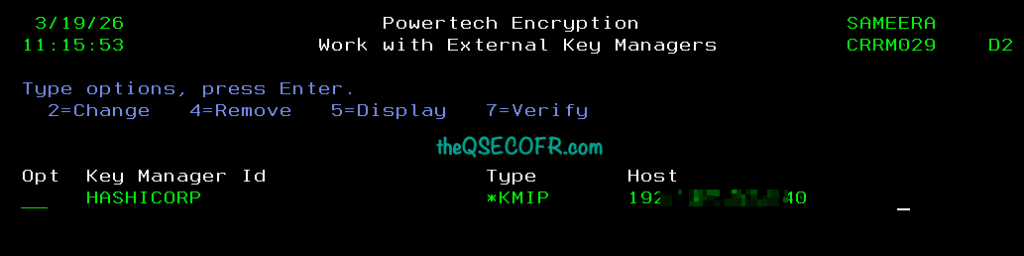
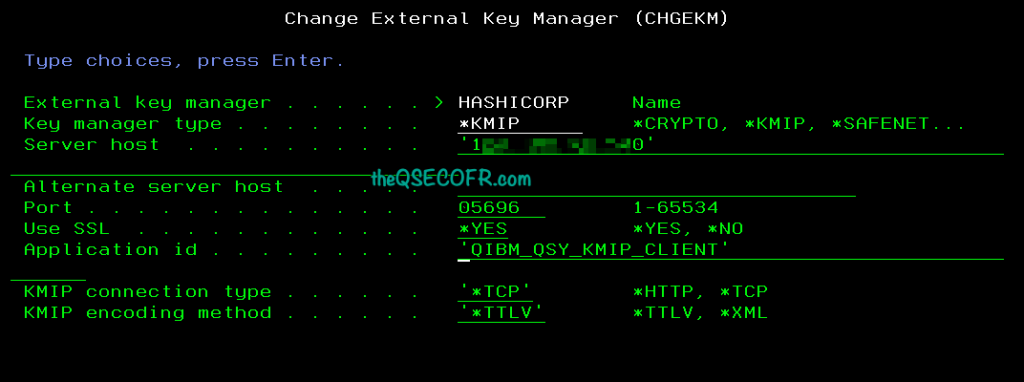
- Validated communication over secure KMIP channels
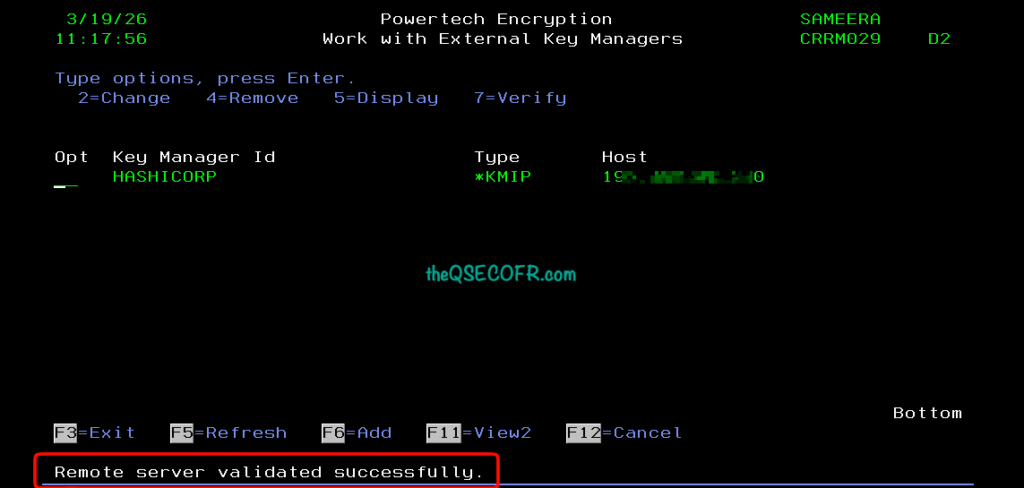
- Symmetric/Data Encryption key Generate and store in Vault.
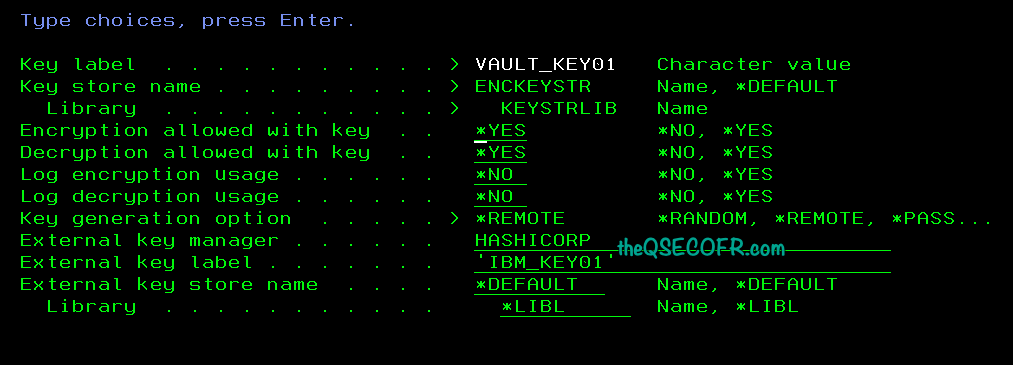
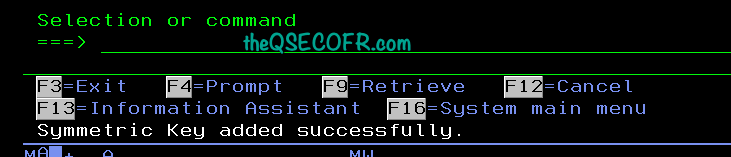
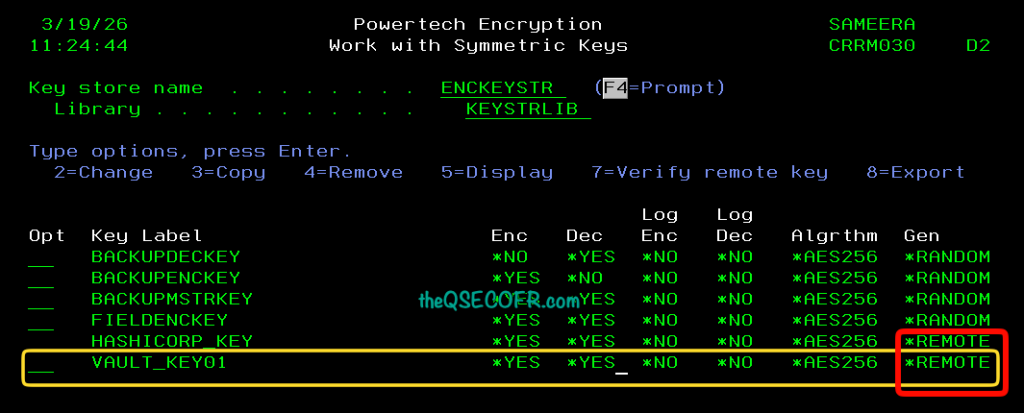

- Enabled secure key usage for Db2 field encryption
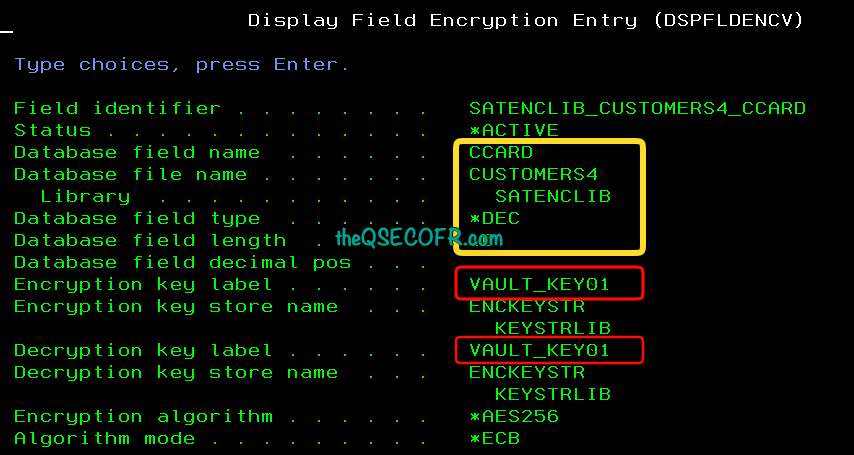
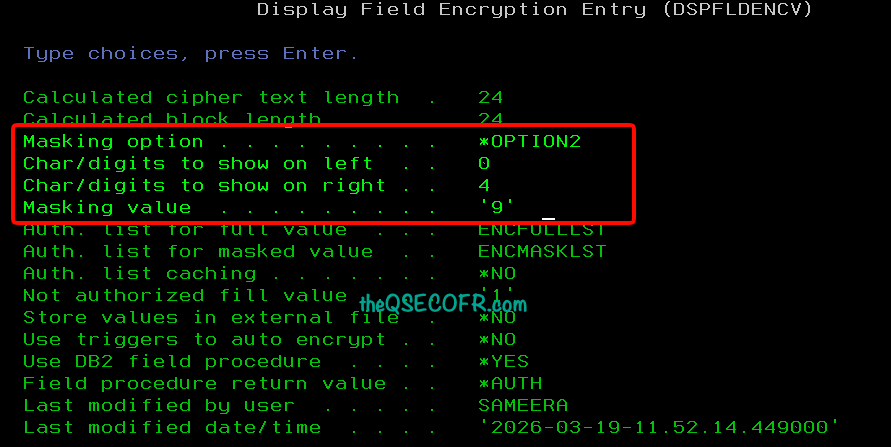
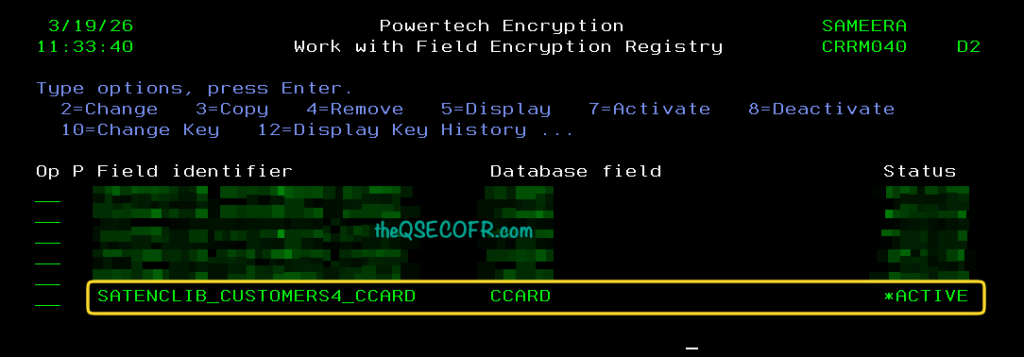
Results:
Those who have fully decrypted value access.

Those who have no access to decrypted data.
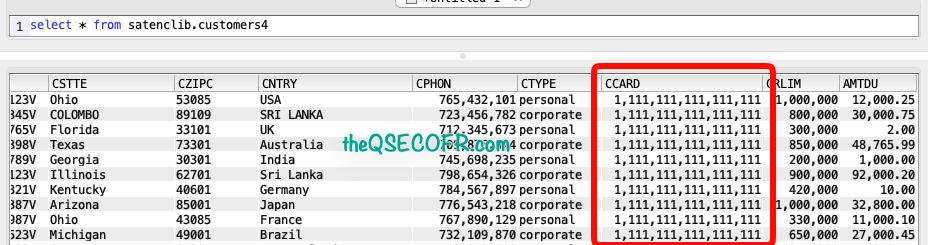
Those who have partial access to decrypted data (only last 4 digits can see).
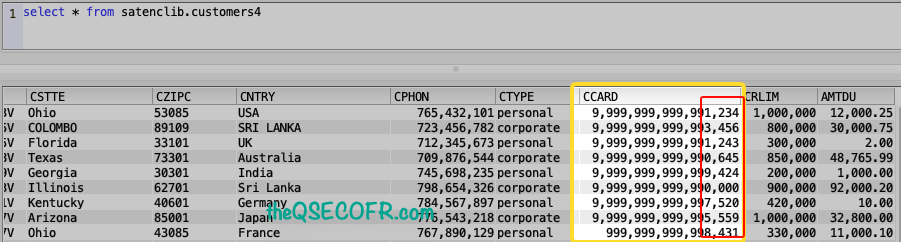
This proves that IBM i workloads can now participate in modern enterprise key management ecosystems.
Benefits for BFSI Organizations in Sri Lanka
This integration directly addresses regulatory and operational requirements:
- Compliance Alignment
- Meets CBSL expectations for encryption and key management
- Supports PDPA requirements for protecting PII
- Enhanced Security
- Keys are stored outside the IBM i environment
- Reduced risk of insider threats and key exposure
- Centralized Governance
- Unified key management across IBM i, LUW, and cloud platforms
- Consistent security policies
- Scalability
- Easily extend encryption strategies across hybrid infrastructures
Final Thoughts
IBM i continues to be a highly secur(e)able and resilient platform—but the security landscape is evolving.
Modern enterprises require: Not just encryption, But enterprise-grade key management
By integrating IBM i with platforms like HashiCorp Vault through solutions such as Fortra Powertech Encryption for IBM i, organizations can:
- Preserve the strengths of IBM i
- Meet modern compliance requirements
- Align with enterprise-wide security strategies
Fortra Powetech Encryption for IBM i Product Page: https://power.fortra.com/products/database-encryption-software-ibm-i
Stay tuned for part 2 of this article, where we’ll delve into how Precisely Assure Encryption can assist you in integrating external key managers for centralized key management.