Is Your Privacy Ready for the Quantum Age? A Guide to Quantum Cryptography
Hey, friend! Is Your Privacy Ready for the Quantum Age? Picture this: You’re sending a super-secret message, and you want to make sure no one peeks at it—ever. That’s where quantum cryptography comes in, shaking up how we protect data with some mind-bending physics. Digital communication depends on cryptography. Every email, bank transaction, cloud login, and government system uses encryption to protect data. Traditional cryptography relies on mathematical problems that computers find hard to solve.
Quantum computing changes this assumption.
Powerful quantum computers can break many classical encryption algorithms. To address this threat, researchers developed quantum cryptography, a security approach based on the laws of physics rather than computational difficulty.
I’ll explain, why you need it, how it operates, the key algorithms, key exchange mechanics, the math behind it, real-world examples, and the latest on standardization. Let’s jump in and make this quantum stuff feel straightforward.
Before start if you haven’t had a chance to check out my Elliptic Curve Cryptography blog post, I’d suggest giving it a read first—it’ll really help you get a better grasp of the concept.
Table of Contents
What Is Quantum Cryptography?
You dive into quantum cryptography when you use quantum mechanics—the weird rules governing tiny particles like photons and electrons—to secure information. Unlike traditional encryption that relies on tough math problems, quantum cryptography taps into nature’s laws to create unbreakable codes. Think of it as sending keys for your locks via particles that scream if anyone tampers with them.
The star player here? The most important application of quantum cryptography is Quantum Key Distribution (QKD). QKD, you distribute encryption keys over quantum channels, and if a hacker tries to intercept, the quantum states change, alerting you instantly. Quantum cryptography isn’t just encryption; it includes protocols for secure communication, authentication, and more, all powered by quantum principles like superposition and entanglement.
Core Idea
If someone tries to eavesdrop on a quantum communication channel, the act of observation changes the data and reveals the attack.
This property makes quantum cryptography fundamentally different from classical encryption.
Why Do You Need Quantum Cryptography?
Hackers evolve, and so must your defenses. Traditional systems like RSA work great against classical computers, but quantum computers? However, in 1994, Peter Shor developed Shor’s Algorithm. A large-scale quantum computer running this algorithm can solve these math puzzles almost instantly. This creates a “Quantum Apocalypse” scenario:
Harvest Now, Decrypt Later: Hackers are stealing encrypted data today, waiting for future quantum computers to unlock it.
Broken Infrastructure: Global banking, government secrets, and personal privacy would effectively disappear overnight.
Quantum cryptography stops that cold by detecting intrusions in real-time. Governments, banks, and healthcare pros push for it to safeguard critical infrastructure. Plus, as quantum threats loom by 2030, you adopt it now to stay ahead. You need quantum cryptography because it offers “information-theoretic security”—proven secure against any eavesdropper, even one with unlimited computing power, thanks to quantum no-cloning theorem.
Quantum Computers Break Classical Cryptography
Quantum computers can run Shor’s algorithm, which can:
Break RSA
Break Elliptic Curve Cryptography (ECC)
Recover private keys efficiently
This capability threatens:
HTTPS connections
Digital signatures
Secure VPNs
Financial and government systems
Mathematics Alone Is No Longer Enough
Traditional cryptography depends on problems that are “hard to compute.” Quantum cryptography removes this dependency by relying on physical laws instead of computational assumptions.
Eavesdropping Must Become Detectable
Classical networks cannot detect passive attackers. Quantum cryptography ensures that any interception leaves evidence, which dramatically improves trust in key exchange.
Cryptographic Algorithm
Type
Purpose
Quantum Safe?
Available Now?
RSA, ECDSA
Asymmetric
Key Establishment, Signatures
No
Yes
AES-GCM
Symmetric
Encryption
Larger Key Sizes Needed
Yes
SHA-3
–
Hash Function
Larger Output Needed
Yes
How Does Quantum Cryptography Work?
Quantum cryptography works by sending information through quantum states. Think of a photon (a particle of light). You can “polarize” it—setting it to a specific angle.
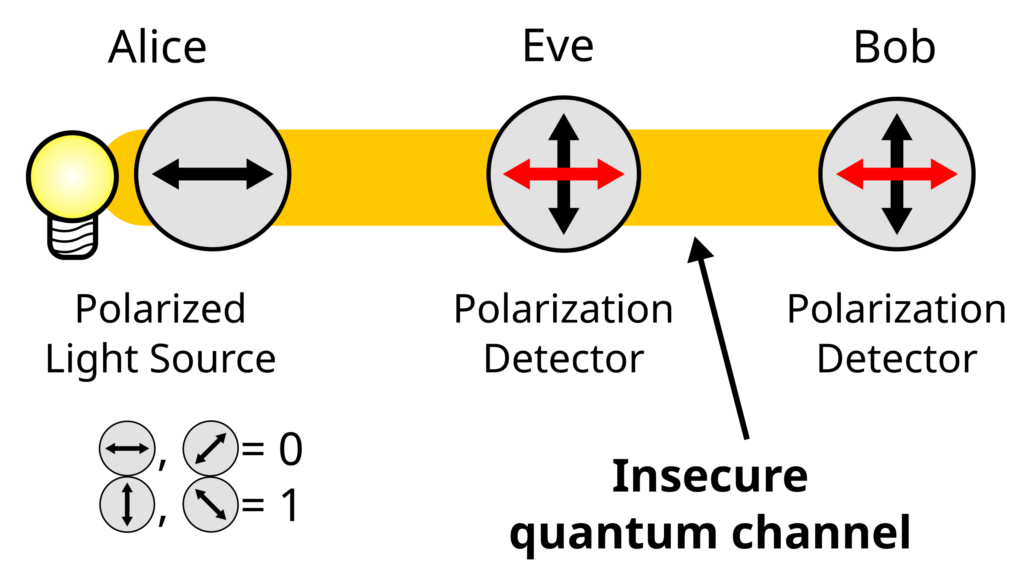
The polarized light is transmitted across an insecure quantum channel and detected by Bob while Eve attempts to eavesdrop on the communication. (src: wikipedia)
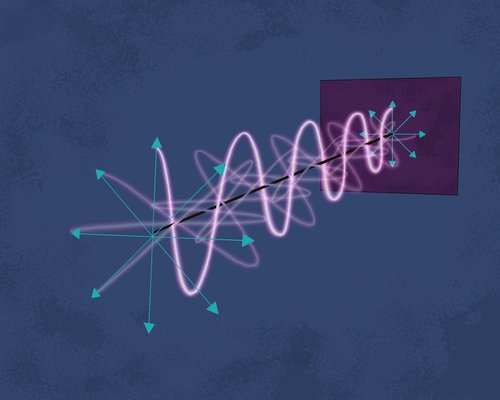
Light is an electromagnetic wave that vibrates, or bobs up and down, perpendicular to its direction of travel. Generally, those vibrations occur randomly in every possible direction perpendicular to the direction of travel. But if light passes through a special filter, such as a pair of polarizing sunglasses, the oscillations are confined to a single plane and the light is said to be polarized. The illustration depicts light that is polarized in one of two directions: in a plane vertical to the direction of travel and in a plane horizontal to the direction of travel. The mixed state denotes light that is unpolarized because it has a mixture of vertical and horizontal polarizations. (source: NIST)
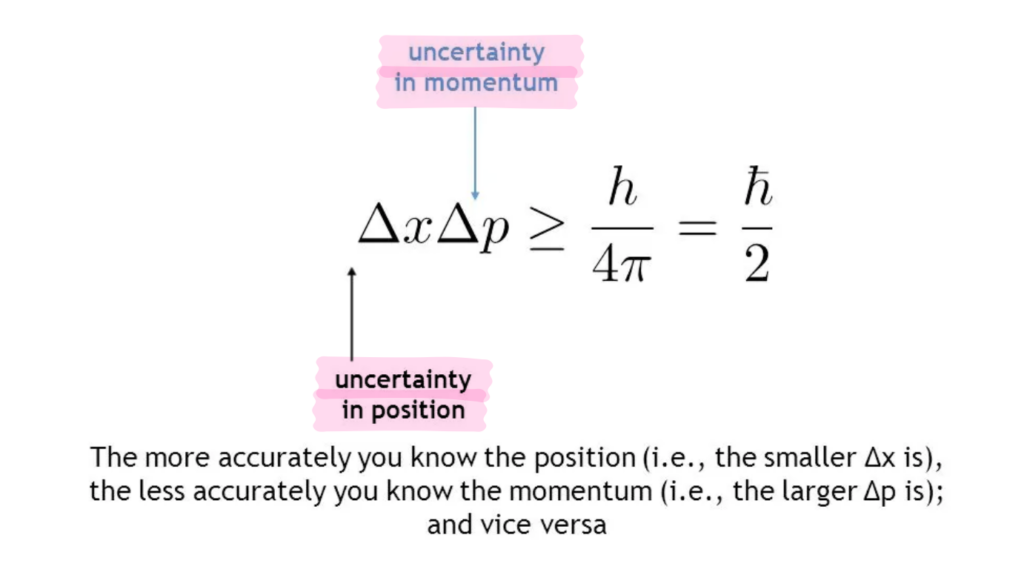
According to the Heisenberg Uncertainty Principle, you cannot measure a quantum system without changing it. If an eavesdropper (often called “Eve”) tries to intercept a photon to read the key, she inevitably alters the photon’s state. When the legitimate receiver (Bob) checks the data, the errors reveal that someone was watching.
Heisenberg’s Uncertainty Principle
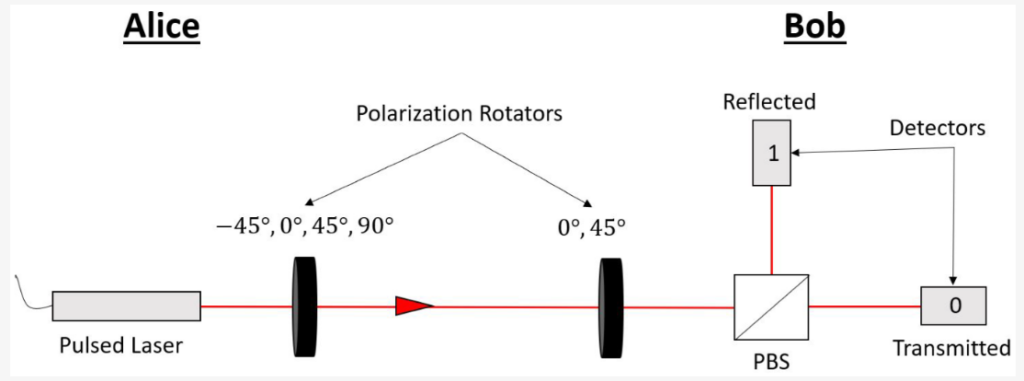
You start by encoding information onto quantum bits, or qubits—often photons polarized in different ways. Sender (Alice) shoots these qubits to receiver (Bob) through a quantum channel, like fiber optics or free space.
Optical diagram with the bases + ( and ) and ( and ). “PBS” defines the polarizing beam-splitter. (src:mdpi)
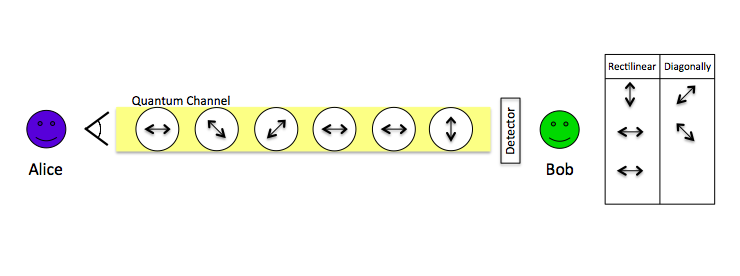
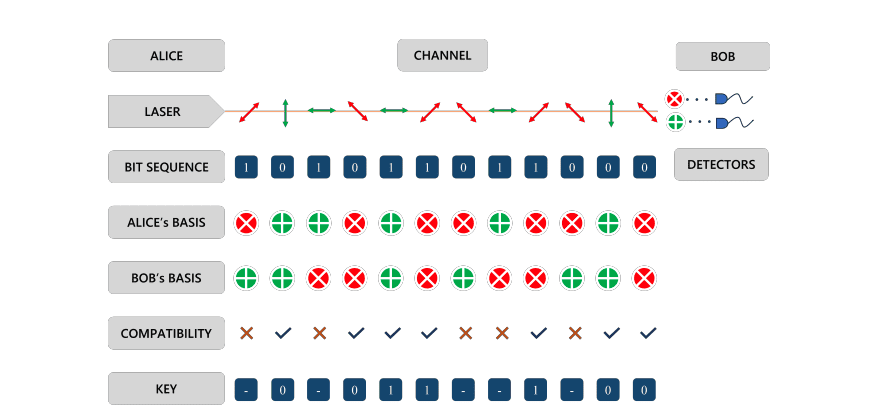
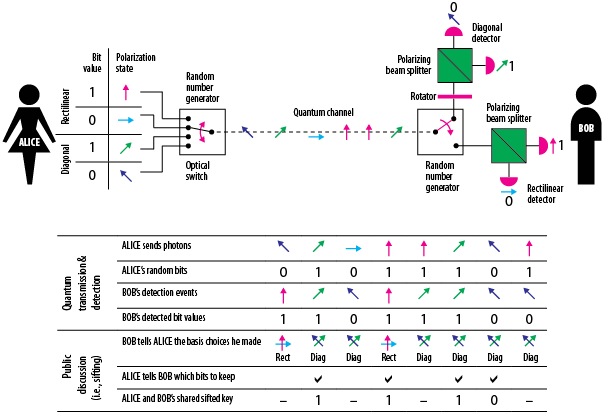
Alice decides her random basis and sequence of qubits. She then sends the qubits as photons to Bob via the quantum channel. Bob detects these qubits and records his results in a table. Based on the table, Bob makes his guess to Alice on what basis she used. (src: wikipedia)
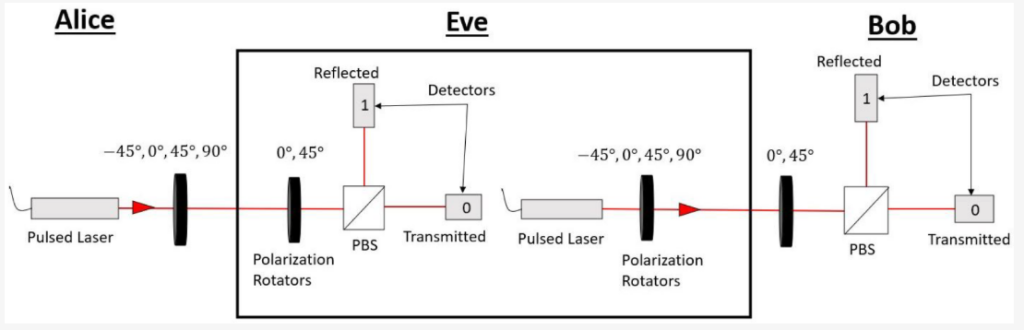
Here’s the magic: If Eve (the eavesdropper) measures a qubit, she disturbs its state due to Heisenberg’s uncertainty principle. Alice and Bob compare a subset of bits over a classical channel to check for errors. High error rate? Someone’s listening—abort and try again. Low errors? They distill a secure key for symmetric encryption like AES.
Optical diagram with Alice, Bob and Eve. (src:mdpi)
You combine this with classical post-processing: Privacy amplification shrinks the key to eliminate leaked info, and error correction fixes transmission noise. The result? A shared secret key that’s provably secure.
Key Quantum Principles Used
Superposition – A quantum particle can exist in multiple states at the same time until measurement occurs.
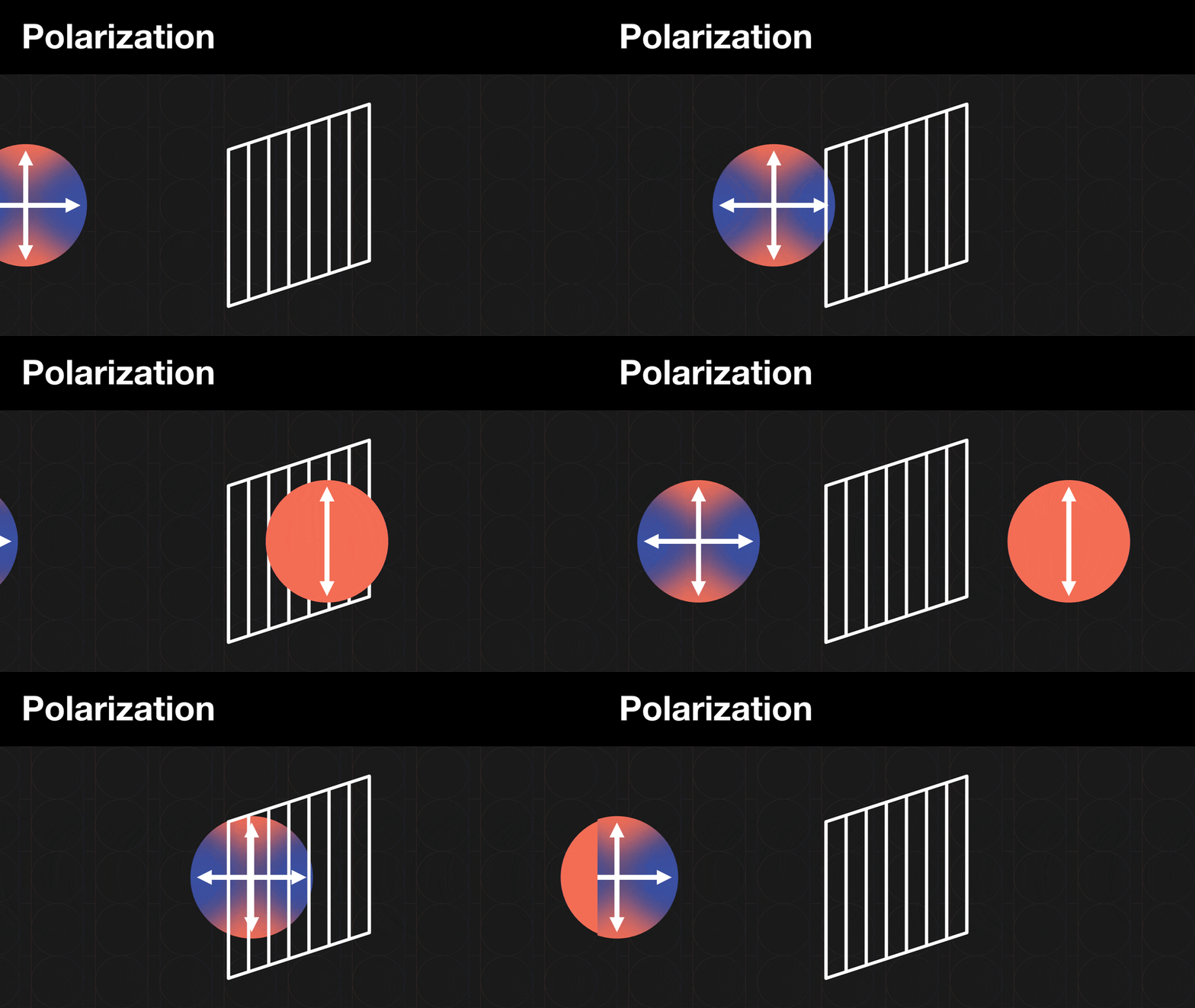
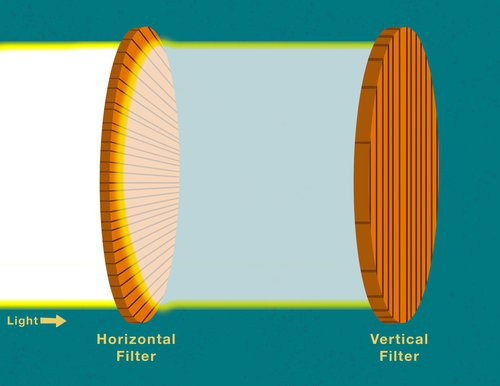
No light passes through a horizontal filter followed by a vertical filter. (src:scienceexchange)
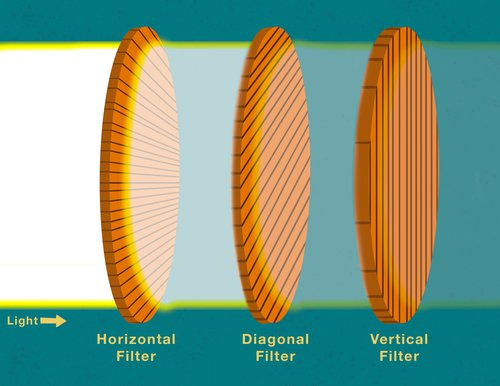
Some light passes through a horizontal filter followed consecutively by a diagonal filter and a vertical filter. (src:scienceexchange)
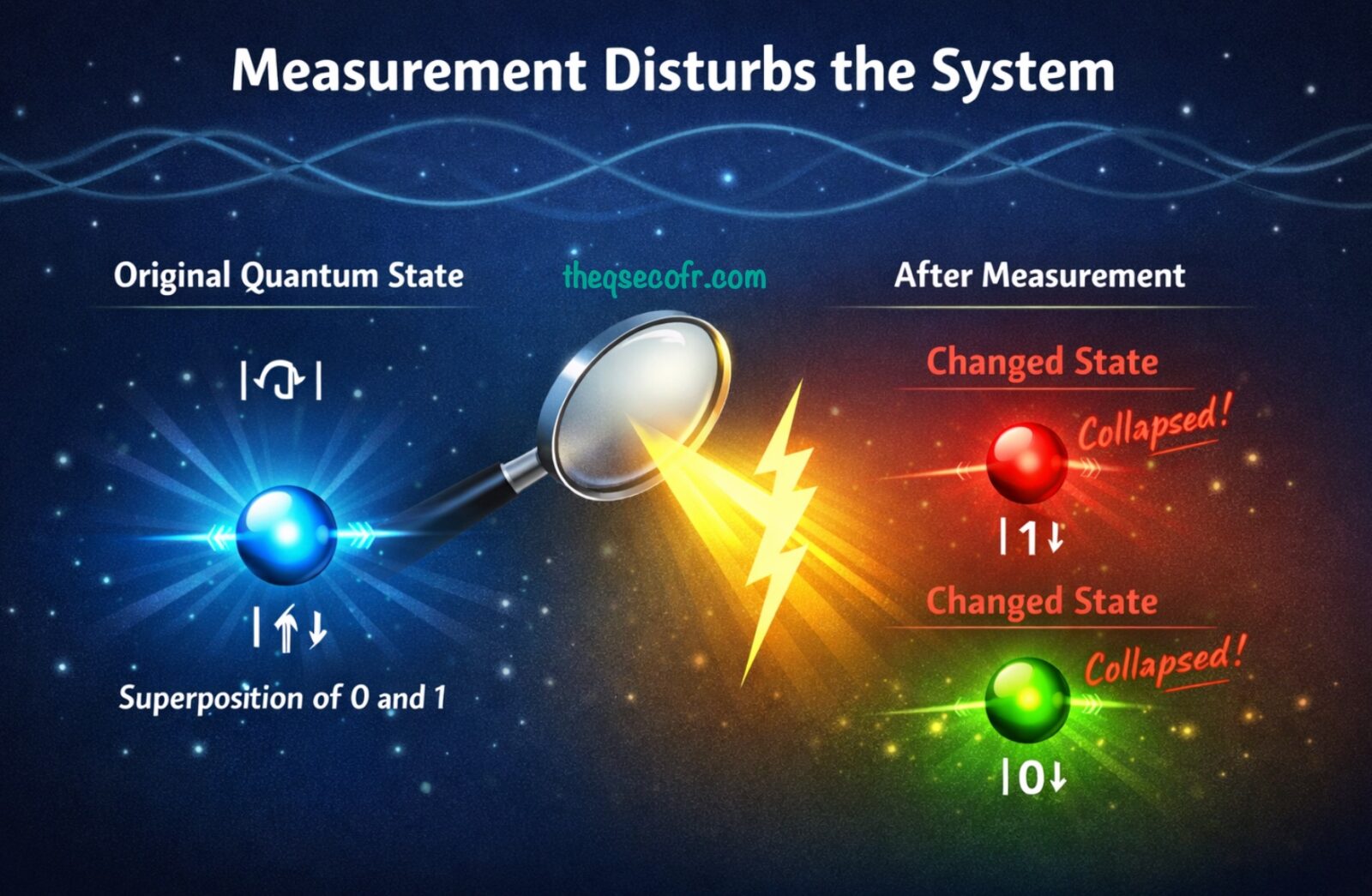
Measurement Disturbs the System – Measuring a quantum state changes it. This makes undetected eavesdropping impossible.
measurement disturbance
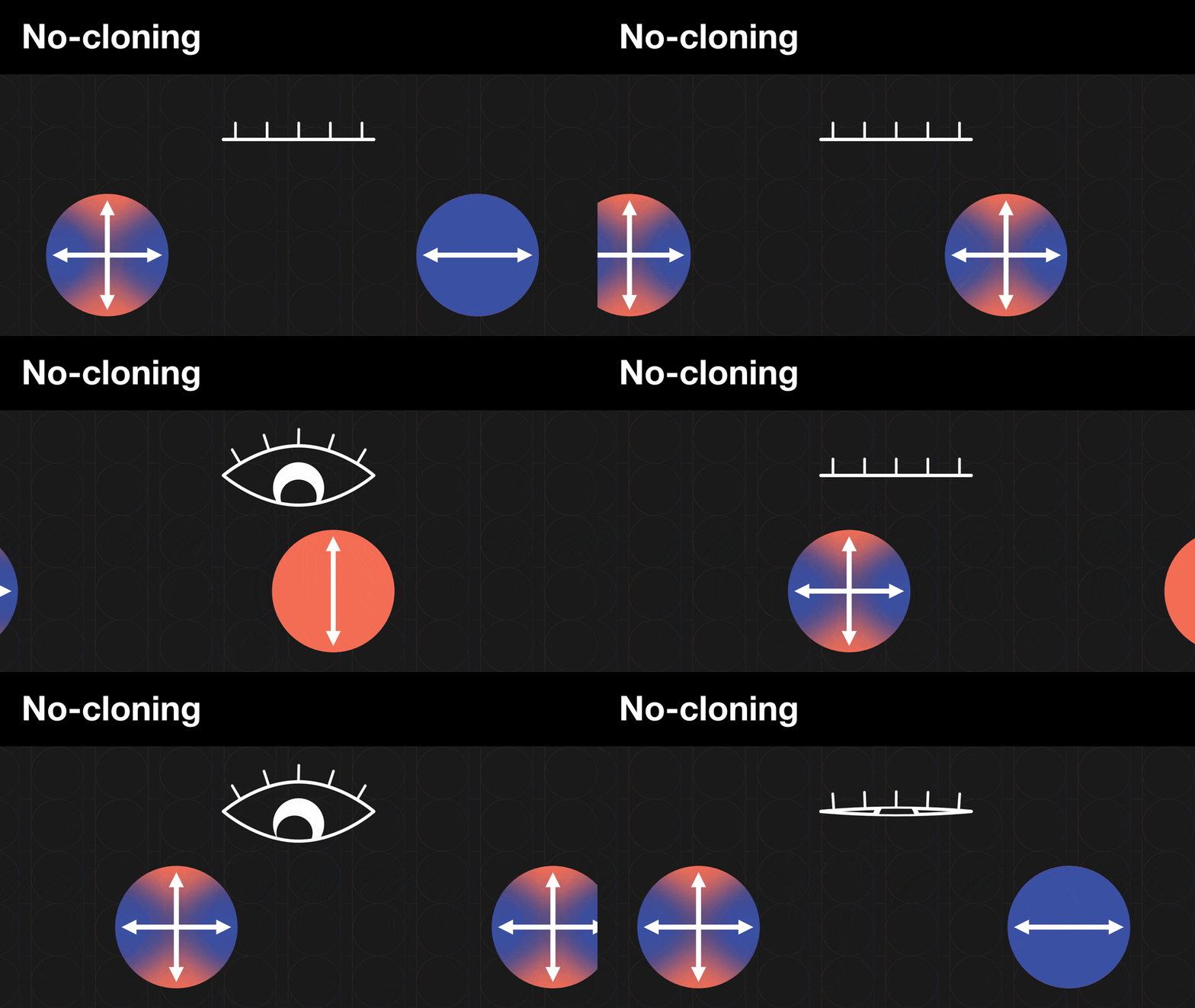
No-Cloning Theorem – Quantum mechanics does not allow perfect copying of unknown quantum states.
Quantum information, such as data encoded in two entangled photons, can never be copied or cloned. If someone tries to peek or record the information, the very act of observing the data destroys the fragile quantum state. (source: NIST)
These principles form the foundation of Quantum Key Distribution.
What Are the Key Algorithms in Quantum Cryptography?
You encounter several algorithms that power quantum cryptography, each building on quantum quirks:
BB84 (Bennett-Brassard 1984): Charles Bennett and Gilles Brassard introduced BB84 in 1984. Alice sends photons in one of four polarizations (horizontal, vertical, +45°, -45°). Bob measures randomly in two bases. They sift keys by matching bases, then check for eavesdropping. It’s the go-to for many systems.
If an attacker intercepts the photons, the error rate increases and exposes the attack.
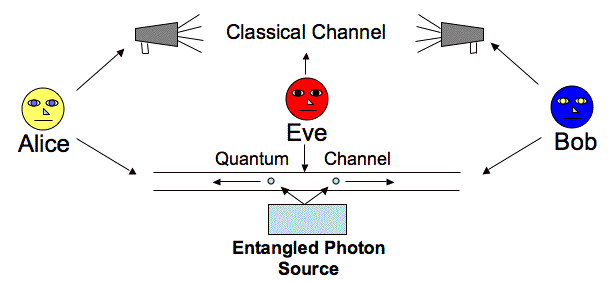
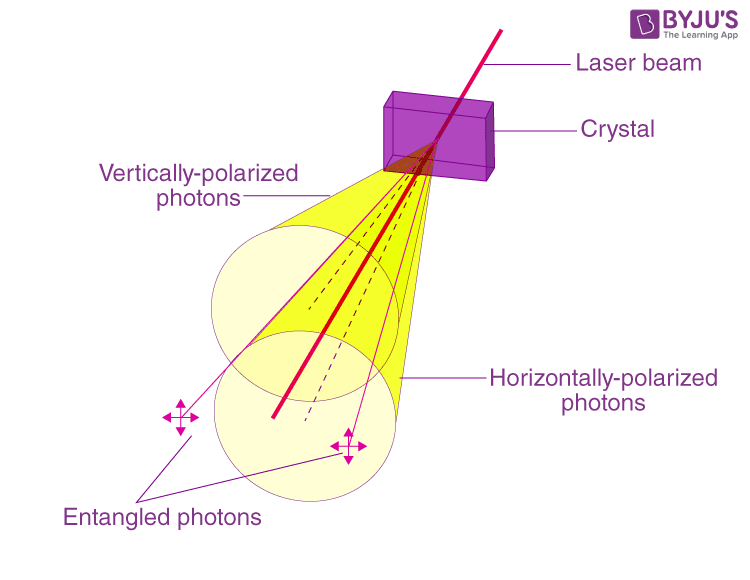
E91 (Ekert 1991): The E91 protocol uses quantum entanglement. You use entangled photon pairs. Alice and Bob measure in random bases; correlations violate Bell’s inequality, confirming no tampering. Entanglement adds extra security.
Entangled particles share linked states
Measuring one instantly affects the other
Any interception breaks the entanglement
This protocol provides strong theoretical security guarantees.
What Is Quantum Entanglement in Simple Terms?
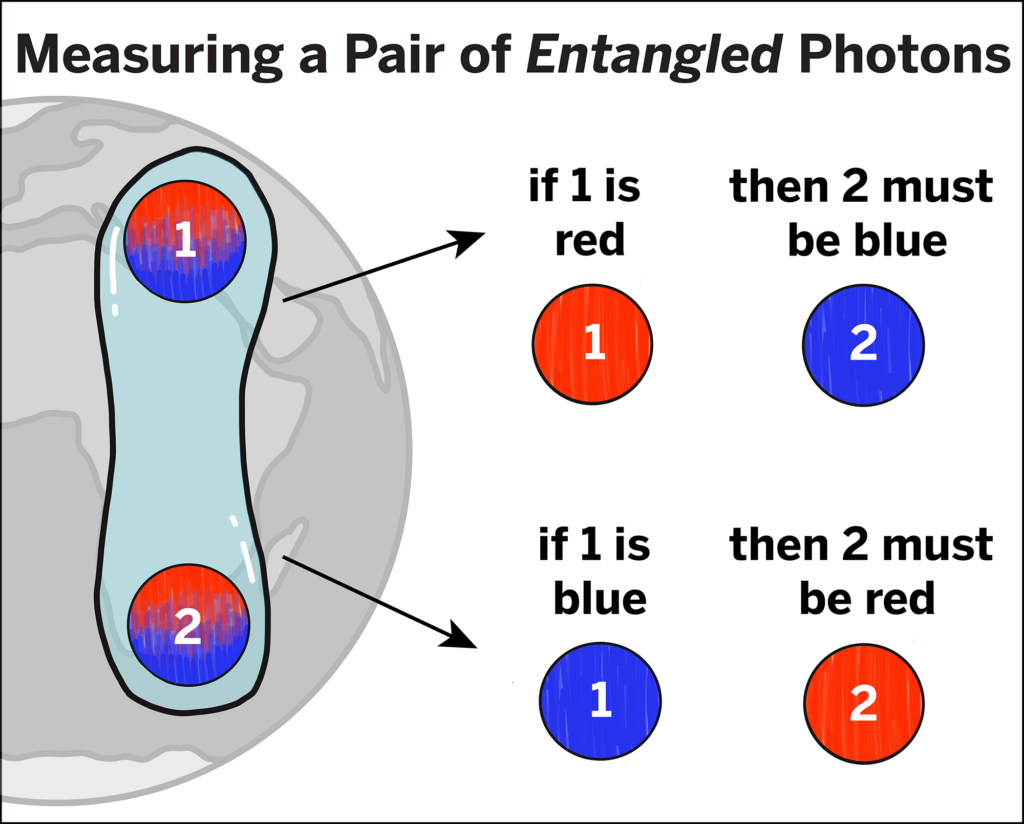
Imagine you have two tiny particles (like electrons or photons). You “link” them together in a special way so they become entangled. After that, even if you separate them—one stays in Colombo and the other flies to the Moon—their behaviors stay perfectly connected.
Here’s the weird part: When you measure one particle (for example, check if its “spin” is up or down), you instantly know what the other particle’s spin is—even though no message travels between them and they’re super far apart. It’s as if they’re sharing one single fate.
Albert Einstein famously called this “spooky action at a distance” because it feels impossible. Yet experiments show it’s real!
This creates a symmetric key for encryption. Unlike Diffie-Hellman, quantum versions detect man-in-the-middle attacks inherently.
The Mathematics Behind Quantum Cryptography
Let’s geek out without overwhelming you.
Quantum states live in Hilbert space, where qubits are vectors like |0⟩ and |1⟩. Superposition lets a qubit be α|0⟩ + β|1⟩, with |α|² + |β|² = 1.
Entanglement ties two qubits: Measure one, and the other instantly correlates, defying classical intuition (Einstein called it “spooky action”).
Example: Rectilinear basis (+) Diagonal basis (×)
The no-cloning theorem says you can’t copy an unknown quantum state perfectly—key to detecting eavesdroppers. Mathematically, if U clones |ψ⟩|0⟩ to |ψ⟩|ψ⟩, it violates unitarity for non-orthogonal states.
Heisenberg uncertainty: Measuring position scrambles momentum, so spying disturbs the system. In BB84, error rate ε relates to leaked info via mutual information bounds, ensuring security if ε < 11% or so.
For Bell’s test in E91: CHSH inequality |S| ≤ 2 classically, but quantum hits up to 2√2, proving security.
Real-World Examples of Quantum Cryptography
You see quantum cryptography in action worldwide.
China’s Micius satellite demonstrated space-to-ground QKD over 1,200 km in 2017, and by 2026, they’ve expanded to a national quantum network linking cities like Beijing and Shanghai.
In Europe, the Quantum Internet Alliance builds entanglement-based networks, with pilots in the Netherlands securing government comms.
Companies like ID Quantique offer commercial QKD systems for banks—Swiss banks use them for inter-branch transfers. Toshiba deploys fiber-based QKD in the UK, protecting utility grids.
In the US, Aliro Quantum rolls out entanglement networks for defense, with case studies showing secure data centers. By 2026, expect QKD in 5G backhauls and cloud security, like Fortanix integrations.
Standardization Efforts for Quantum Cryptography
Organizations race to standardize quantum cryptography for global compatibility.
ETSI’s Industry Specification Group on QKD leads with specs like GS QKD 022 for network architecture, aiming for interoperable systems by 2026.
ITU focuses on satellite QKD, with 2025 reports on architectures and requirements. ISO/SC 27 works on quantum-resistant standards, blending QKD with Post-Quantum Cryptography (PQC).
NIST emphasizes PQC but evaluates QKD for niche uses, like in NSA guidelines distinguishing it from classical crypto. By 2026, expect broader adoption, with conferences like IEEE QCNC pushing forward.
As quantum networks mature, adoption will increase in finance, defense, and telecommunications.
Limitations of Quantum Cryptography
Requires specialized hardware
Limited transmission distance
High deployment cost
Not suitable for all networks
Because of these limitations, organizations often combine quantum cryptography with post-quantum algorithms.
Cryptographic Algorithm
Type
Purpose
Quantum Safe?
Available Now?
RSA, ECDSA
Asymmetric
Key Establishment, Signatures
No
Yes
AES-GCM
Symmetric
Encryption
Larger Key Sizes Needed
Yes
SHA-3
–
Hash Function
Larger Output Needed
Yes
Post Quantum Cryptography
Public
Encryption, Key Establishment, Signatures
Yes
No
Quantum Key Distribution
Symmetric
Key Generation
Yes
Yes
The Future of Quantum Cryptography
Quantum cryptography will:
Secure critical infrastructure
Protect long-term confidential data
Complement post-quantum cryptography
Update: What is Post-Quantum Cryptography (PQC), Check out my latest blog post on Post-Quantum Cryptography (PQC). The link is located at the bottom of this post.
Embrace Quantum Cryptography Today
There you go—quantum cryptography unpacked! You now grasp how it uses physics to outsmart hackers, from BB84 basics to satellite feats. As quantum tech advances, integrate it into your security toolkit. Curious about trying QKD? Check out open-source sims or vendor demos, also youtube. Share your thoughts below—what quantum topic next?
Wikipedia – Quantum Key Distribution (QKD) — Canonical definition of QKD, quantum measurement disturbance, and shared secret key generation. Quantum Key Distribution (Wikipedia)
NIST – Heisenberg’s Uncertainty & Quantum Disturbance — Explains why measurement affects quantum states and makes eavesdropping detectable. Cryptography in the Quantum Age (NIST)